
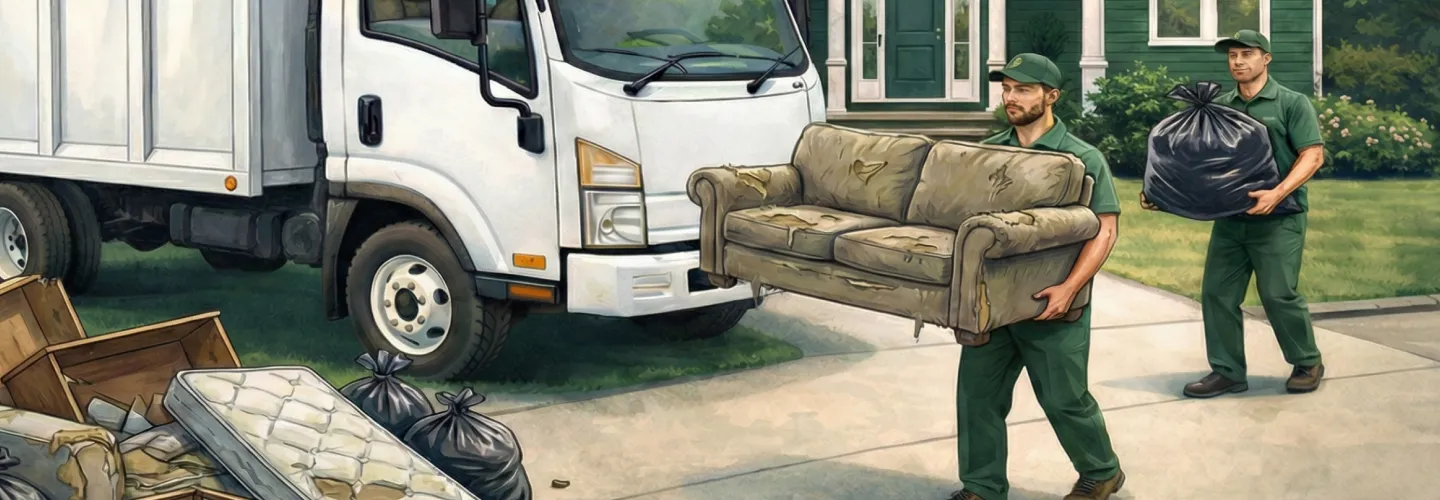
Gainesville Scrap Metal Removal Services
Choose our scrap metal removal for hassle-free, eco-friendly service that saves you time and ensures responsible recycling—making your cleanup effortless and sustainable.
Get a Free QuoteOur Gainesville Junk Removal Services
Scrap Metal Removal in Gainesville, GA – Local Service Guide
Scrap metal removal in Gainesville, GA is essential for keeping homes and businesses safe, clean, and compliant with local regulations. In neighborhoods like Riverside Drive and New Holland, residents often need removal services during spring cleanouts, after appliance upgrades, or when replacing old furniture and hot tubs. Seasonal storms and yard cycles can also prompt the need for clearing out garages, basements, and yards, especially in areas prone to flooding or with heavy tree coverage. For commercial properties in Midtown or along Jesse Jewell Parkway, offices, restaurants, and warehouses require timely, discreet scrap metal removal to maintain operations and meet industry standards. Specialty projects—such as estate cleanouts, foreclosures, or construction debris—demand careful planning and coordination, particularly when handling large volumes or unique property layouts. Gainesville offers multiple disposal and recycling options, and understanding local rules is crucial. For official guidelines and resources, visit the Gainesville Public Works Department.
Key Considerations for Scrap Metal Removal in Gainesville
- Timing cleanouts with seasonal events or property transitions
- Checking for required permits or city regulations
- Choosing proper disposal or recycling channels
- Ensuring easy access for removal teams
- Estimating volume and category-specific needs
- Coordinating with local schedules and weather conditions
Benefits of Scrap Metal Removal in Gainesville
Eco-Friendly Disposal
Fast and Reliable Service
Competitive Pricing
Licensed and Insured Team
Convenient Scheduling
Safe Removal Practices
Coordinating Scrap Metal Disposal with Gainesville's Public Works and Sanitation Services
Scrap metal removal in Gainesville requires coordination with the city's municipal sanitation and solid waste infrastructure. The Gainesville Public Works Department oversees waste collection services, including the handling of bulky metallic items that fall outside standard curbside pickup. Residents and contractors generating scrap metal from home repairs, appliance replacements, or property cleanouts should be aware of the following municipal guidelines:
- Ferrous metals (steel, iron, cast iron) and non-ferrous metals (copper, aluminum, brass) must be separated from general household waste before disposal
- Scrap metal items should not be placed in standard residential trash bins; oversized items require scheduled bulk collection or self-hauling to an approved facility
- Commercial generators producing scrap metal must use licensed haulers authorized to operate within Gainesville city limits
- Items containing hazardous components—such as refrigerant lines, mercury switches, or lead solder—require special handling before metal recovery
\n\n
Gainesville Public Works Department
300 Henry Ward Way, Gainesville, GA 30501
Phone: (770) 535-6883
Official Website: Gainesville Public Works Department
\n\n
Residents should contact Public Works to confirm current bulk collection schedules and any seasonal restrictions on metal item pickup.
Georgia Environmental Protection Division Requirements for Scrap Metal Recycling
Georgia's solid waste management framework, administered by the Georgia Environmental Protection Division (GA EPD), establishes statewide standards that directly affect scrap metal handling and disposal in Gainesville. The Georgia Comprehensive Solid Waste Management Act (O.C.G.A. § 12-8-20 et seq.) mandates proper waste classification and encourages material recovery to reduce landfill burden. Key state-level requirements for scrap metal removal include:
- Landfill diversion: Georgia encourages diversion of recyclable metals from municipal solid waste streams; scrap metal is classified as a recoverable commodity rather than waste when properly managed
- Transporter requirements: Vehicles hauling scrap metal commercially must comply with Georgia Department of Transportation weight limits and load-securing regulations
- Scrap metal dealer registration: Under O.C.G.A. § 10-1-350, scrap metal dealers must maintain transaction records, verify seller identification, and hold materials for a prescribed waiting period before processing
- Hazardous material exclusions: Scrap metal contaminated with oils, PCBs, asbestos insulation, or lead-based coatings may be classified as hazardous waste under Resource Conservation and Recovery Act (RCRA) standards and requires separate handling
These regulations protect both public health and the environment while supporting Gainesville's recycling infrastructure.
Gainesville Code Enforcement Standards for Scrap Metal Accumulation and Removal
The Gainesville Code Enforcement division actively monitors properties for violations related to scrap metal accumulation, illegal storage, and improper disposal. Property owners in Gainesville must comply with local ordinances governing the storage and removal of metallic debris to maintain neighborhood standards and avoid penalties. Important compliance considerations include:
- Property maintenance codes prohibit the outdoor accumulation of scrap metal, abandoned appliances, and automotive parts on residential properties without proper screening or enclosure
- Abandoned vehicles and vehicle parts containing recoverable metals must be removed within the timeframe specified in code violation notices, typically 10–30 days
- Construction and demolition debris containing metal components (rebar, flashing, ductwork, structural steel) must be removed from job sites promptly and transported to licensed recycling or disposal facilities
- Illegal dumping of scrap metal on public rights-of-way, vacant lots, or waterways carries fines and potential criminal penalties under Gainesville municipal code
\n\n
Gainesville Code Enforcement
300 Henry Ward Way, Gainesville, GA 30501
Phone: (770) 535-6880
Official Website: Gainesville Code Enforcement
\n\n
Residents who observe illegal scrap metal dumping should report violations directly to Code Enforcement for investigation.
Safety Protocols and Hazardous Material Handling for Scrap Metal Projects in Gainesville
Scrap metal removal presents significant safety hazards that require adherence to professional standards and federal workplace safety regulations. Whether removing old fencing, dismantling metal sheds, or extracting plumbing and HVAC components, proper precautions protect workers and property occupants. Critical safety requirements include:
- OSHA compliance: Commercial scrap metal removal operations must follow Occupational Safety and Health Administration standards for cut-resistant gloves, steel-toed footwear, eye protection, and hearing protection when using cutting tools
- Lead-based paint: Metal components from structures built before 1978 may contain lead paint; the EPA Renovation, Repair, and Painting Rule requires lead-safe work practices and certified renovator oversight
- Asbestos-wrapped materials: Older pipes, boilers, and ductwork may have asbestos insulation that must be assessed and abated by licensed professionals before metal recovery
- Sharp edges and heavy loads: Cut metal produces jagged edges requiring careful handling; items exceeding 50 pounds should be moved with mechanical assistance or team lifting protocols
- Refrigerant-containing appliances: Air conditioners, refrigerators, and heat pumps require certified refrigerant recovery under EPA Section 608 regulations before the metal housing can be scrapped
\n\n
Gainesville Fire Department
300 Henry Ward Way, Gainesville, GA 30501
Phone: (770) 535-6885
Official Website: Gainesville Fire Department
\n\n
The Gainesville Fire Department can provide guidance on fire safety protocols when torch-cutting or welding operations are involved in scrap metal removal projects.
Scrap Metal Sorting, Recycling, and Material Recovery Options Near Gainesville
Maximizing material recovery from scrap metal removal projects supports Gainesville's waste diversion goals and Georgia's statewide recycling objectives. Proper sorting at the point of collection significantly increases the recyclability and resale value of recovered metals. Residents and contractors should follow these material separation guidelines:
- Ferrous metals (steel beams, iron pipes, cast iron fixtures, automotive frames) are magnetic and typically accepted at most scrap yards at lower per-pound rates
- Non-ferrous metals (copper wiring, aluminum siding, brass fixtures, stainless steel appliances) command higher recycling value and should be separated from ferrous materials
- Appliance metals: Washing machines, dryers, water heaters, and dishwashers are widely accepted at scrap recycling facilities after hazardous components (capacitors, mercury switches, refrigerants) are removed
- Construction metals: Rebar, metal roofing, steel studs, and copper plumbing from renovation or demolition projects should be sorted by type for efficient processing
- Prohibited contaminants: Scrap metal loads contaminated with concrete, wood, insulation, or household waste may be rejected or subject to contamination surcharges at recycling facilities
The Georgia Environmental Protection Division maintains resources on permitted solid waste handling facilities and recycling operations throughout Hall County. Residents should verify that any scrap metal recycler they use holds current permits and complies with Georgia's scrap metal dealer registration requirements.
What Neighborhoods Do We Serve Throughout Gainesville, GA?
- Downtown Gainesville: The historic commercial core features older buildings with metal fire escapes, vintage HVAC systems, and aging infrastructure that frequently generate scrap metal during renovation projects. Narrow streets and on-street parking may require coordination with the city for temporary loading zones.
- Midland Avenue Area: This established residential neighborhood contains mid-century homes with original metal plumbing, ductwork, and fencing. Properties often yield significant ferrous and non-ferrous metals during remodeling or estate cleanouts.
- New Holland: A diverse neighborhood with a mix of single-family homes and small commercial properties. Older automotive repair shops and light industrial sites may accumulate scrap metal requiring periodic removal and proper recycling.
- Limestone Parkway Corridor: This commercial and retail corridor generates scrap metal from tenant buildouts, signage replacements, and equipment upgrades. Loading dock access is generally available, facilitating efficient removal of heavy metal items.
- Bradford Street / Riverside Area: Proximity to waterways requires heightened environmental awareness during scrap metal removal to prevent stormwater contamination. The Gainesville Water Resources department enforces pollution prevention standards in this area.
- Enota Drive Neighborhood: Suburban residential properties with larger lots and driveway access simplify heavy metal item removal. Common scrap sources include old swing sets, metal storage buildings, chain-link fencing, and replaced appliances.